Liver Condition Guide
Hepatitis C
Hepatitis C is now curable — but monitoring your liver during and after treatment is essential.
Hepatitis C is a viral infection that causes liver inflammation and can lead to serious liver damage. Modern direct-acting antiviral (DAA) treatments cure over 95% of cases, but patients need ongoing monitoring to assess liver recovery and screen for complications, especially if fibrosis was present before treatment.
Understanding Hepatitis C
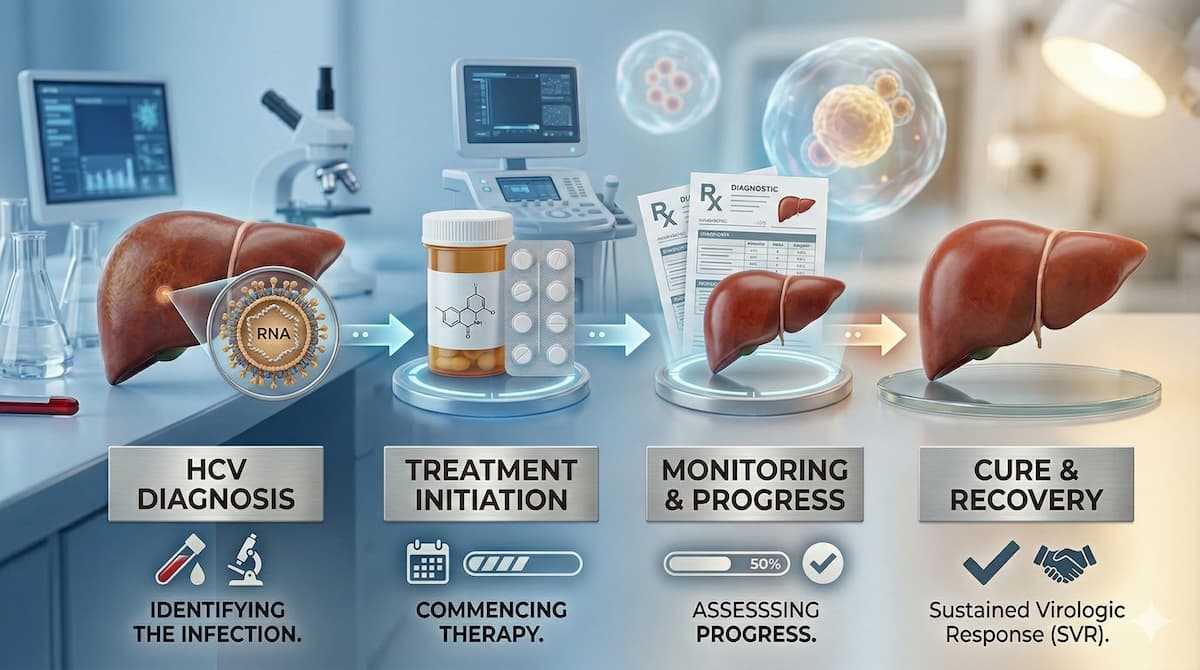
Hepatitis C virus (HCV) is a blood-borne infection that primarily affects the liver. Many people are unaware they have it because symptoms may not appear for decades. Left untreated, chronic hepatitis C can cause fibrosis, cirrhosis, liver cancer, and liver failure. The good news: DAA medications now cure HCV in 8–12 weeks with minimal side effects.
Acute vs. Chronic Hepatitis C
Understanding the phase of infection guides treatment and monitoring decisions.
- •Acute HCV: The first 6 months after infection. About 15–25% of people clear the virus spontaneously.
- •Chronic HCV: If the virus persists beyond 6 months. Without treatment, chronic HCV slowly damages the liver over decades.
- •Post-SVR (Sustained Virologic Response): After successful treatment, the virus is undetectable. But liver monitoring continues if fibrosis was present.
Treatment with DAAs
Direct-acting antivirals have revolutionized hepatitis C treatment:
- •Cure rates exceed 95% across all HCV genotypes
- •Treatment typically lasts 8–12 weeks (oral pills, no injections)
- •Common regimens: sofosbuvir/velpatasvir (Epclusa), glecaprevir/pibrentasvir (Mavyret)
- •Minimal side effects compared to older interferon-based treatments
- •SVR (cure) is confirmed when HCV RNA is undetectable 12 weeks after treatment ends
- •Even patients with compensated cirrhosis can be successfully treated
Post-Cure Monitoring
Being cured of HCV doesn't mean monitoring stops — especially if you had fibrosis:
- •Patients with F3–F4 fibrosis need lifelong HCC surveillance (ultrasound every 6 months)
- •Liver enzymes should normalize after SVR — persistent elevation needs investigation
- •FibroScan can track fibrosis regression after cure (improvement is common over 1–3 years)
- •Re-infection is possible — HCV cure does not provide immunity
- •Patients with cirrhosis still need variceal screening and MELD monitoring
Risk Factors & Transmission
HCV is transmitted through blood-to-blood contact:
- •Sharing needles or injection drug equipment (most common route)
- •Blood transfusions before 1992 (before routine screening)
- •Healthcare needle-stick injuries
- •Tattoos or piercings with unsterilized equipment
- •Mother-to-child transmission during birth (uncommon, ~5%)
- •Sexual transmission (rare but possible, higher risk with HIV co-infection)
Key Labs to Track
HCV RNA (Viral Load)
Confirms active infection and monitors treatment response. Undetectable = cured (SVR).
ALT / AST
Liver inflammation markers. Should normalize after successful treatment.
FibroScan (kPa)
Tracks fibrosis stage before, during, and after treatment. Fibrosis often regresses post-SVR.
AFP (Alpha-Fetoprotein)
HCC screening marker. Required every 6 months for patients with F3–F4 fibrosis.
Platelet Count
Low platelets suggest portal hypertension. Important for cirrhotic HCV patients.
Bilirubin & Albumin
Liver synthetic function markers. Track recovery after treatment.
How LiverTracker Helps
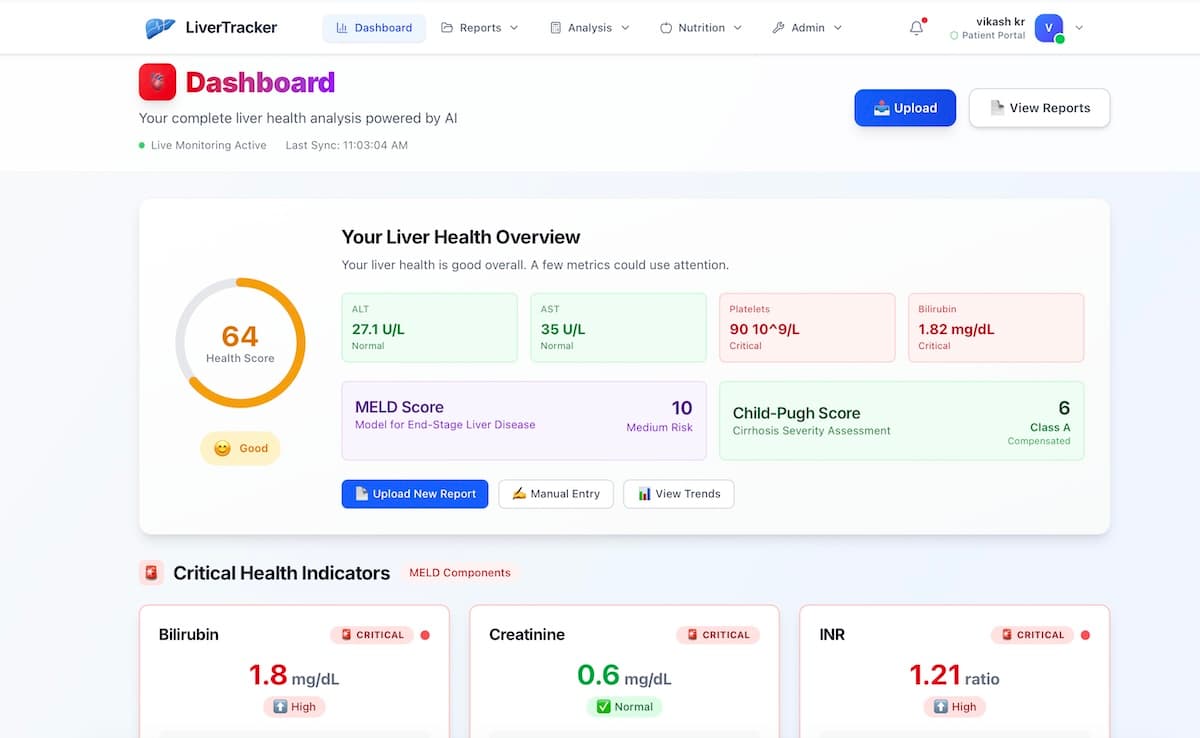
Track viral load results alongside liver enzyme trends
Monitor fibrosis regression after achieving SVR (cure)
AI-powered alerts if liver enzymes remain elevated post-treatment
Automatic MELD score calculation for patients with cirrhosis
HCC surveillance reminders and AFP tracking
Share your complete treatment history with your hepatologist
Consolidated lab reports showing your full HCV treatment journey
See Your Data Come to Life
Upload your lab reports and get instant AI-powered insights, trend charts, and health scores.
Frequently Asked Questions
Is hepatitis C really curable?
Yes. Modern DAA medications cure over 95% of hepatitis C cases in 8–12 weeks. Cure is defined as SVR — sustained virologic response, meaning the virus is undetectable in your blood 12 weeks after completing treatment.
Do I still need monitoring after being cured?
If you had significant fibrosis (F3 or F4) before treatment, yes. You need lifelong HCC screening every 6 months and periodic liver function tests. If you had minimal fibrosis (F0–F2), monitoring is less intensive but still recommended for 1–2 years post-SVR.
Can I get hepatitis C again after being cured?
Yes. Being cured of HCV does not provide immunity. Re-infection is possible if you are exposed to the virus again. However, re-infection can also be treated and cured.
How does LiverTracker help during HCV treatment?
You can upload your lab reports before, during, and after treatment to track viral load, liver enzymes, and fibrosis scores. LiverTracker shows you trends over time and flags any concerning changes, helping you and your doctor make informed decisions.
Related Conditions
Take Control of Your Liver Health
Upload your lab reports, track your progress, and get AI-powered insights — all for free.
Get Started FreeMedical Disclaimer: This page is for educational purposes only and does not constitute medical advice. Always consult your hepatologist or primary care physician for diagnosis and treatment decisions.