Liver Condition Guide
Non-Alcoholic Fatty Liver Disease (NAFLD)
The most common liver condition worldwide — and one of the most manageable with the right tracking.
NAFLD affects up to 25% of adults globally. It ranges from simple fat accumulation (steatosis) to the more serious NASH, which can progress to fibrosis and cirrhosis. Early detection and consistent monitoring are key to preventing progression.
Understanding NAFLD
Non-Alcoholic Fatty Liver Disease is a spectrum of conditions caused by fat buildup in the liver in people who drink little to no alcohol. It is closely linked to metabolic syndrome, obesity, type 2 diabetes, and high cholesterol. Most people with NAFLD have no symptoms, which is why regular lab monitoring is critical.
Stages of NAFLD
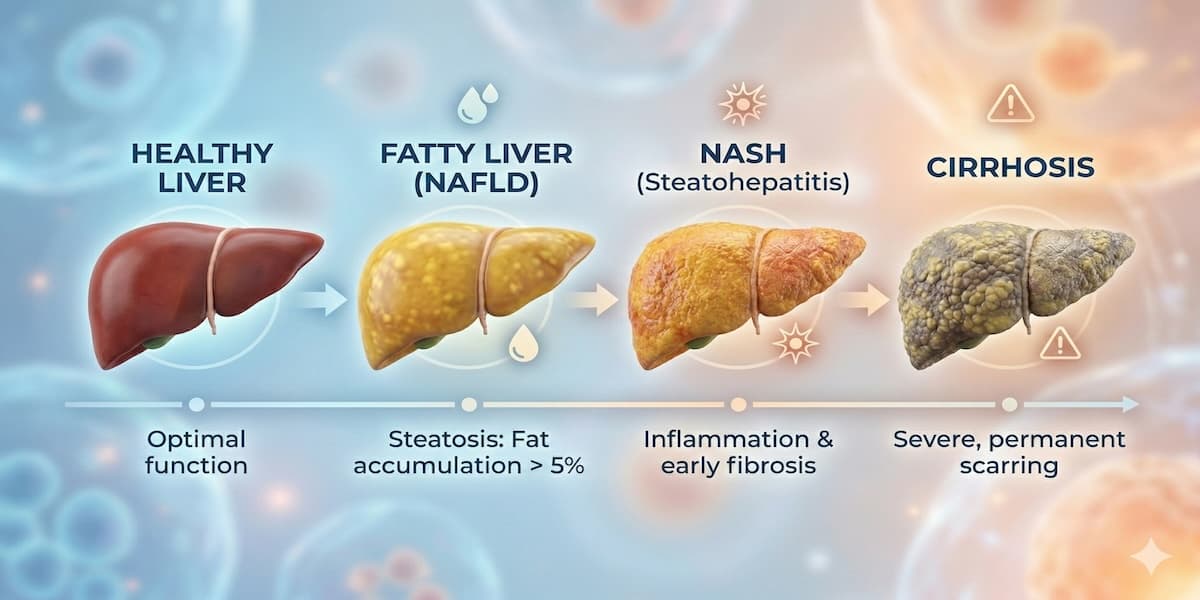
NAFLD progresses through distinct stages. Understanding where you are helps guide treatment.
- •Simple Steatosis (NAFL): Fat in the liver without significant inflammation. Usually benign but needs monitoring.
- •Non-Alcoholic Steatohepatitis (NASH): Fat plus inflammation and liver cell damage. Can progress to fibrosis.
- •Fibrosis: Scar tissue begins forming around the liver. Staged F1 through F4.
- •Cirrhosis (F4): Extensive scarring that impairs liver function. May require transplant evaluation.
Risk Factors
Several factors increase your risk of developing or worsening NAFLD:
- •Obesity or overweight (especially central/abdominal fat)
- •Type 2 diabetes or insulin resistance
- •High triglycerides or high LDL cholesterol
- •Metabolic syndrome
- •Polycystic ovary syndrome (PCOS)
- •Sleep apnea
- •Family history of liver disease
Treatment & Management
There is currently no FDA-approved medication specifically for NAFLD/NASH, but lifestyle changes are highly effective:
- •Weight loss of 7–10% of body weight can significantly reduce liver fat and inflammation
- •Regular exercise (150+ minutes/week of moderate activity)
- •Mediterranean diet — rich in olive oil, fish, vegetables, and whole grains
- •Control diabetes and cholesterol with your doctor's guidance
- •Avoid alcohol and hepatotoxic medications
- •Regular FibroScan and lab monitoring to track progression
Key Labs to Track
ALT (Alanine Aminotransferase)
Primary marker for liver cell damage. Often the first enzyme to elevate in NAFLD.
AST (Aspartate Aminotransferase)
Used alongside ALT. AST/ALT ratio > 1 may suggest advanced fibrosis.
GGT (Gamma-Glutamyl Transferase)
Sensitive marker that can indicate fatty liver even when ALT is normal.
Triglycerides
Directly linked to liver fat accumulation. High levels worsen NAFLD.
HbA1c / Fasting Glucose
Insulin resistance drives NAFLD progression. Tracking glucose control is essential.
FibroScan (kPa + CAP)
Non-invasive measure of liver stiffness (fibrosis) and fat content (steatosis).
How LiverTracker Helps
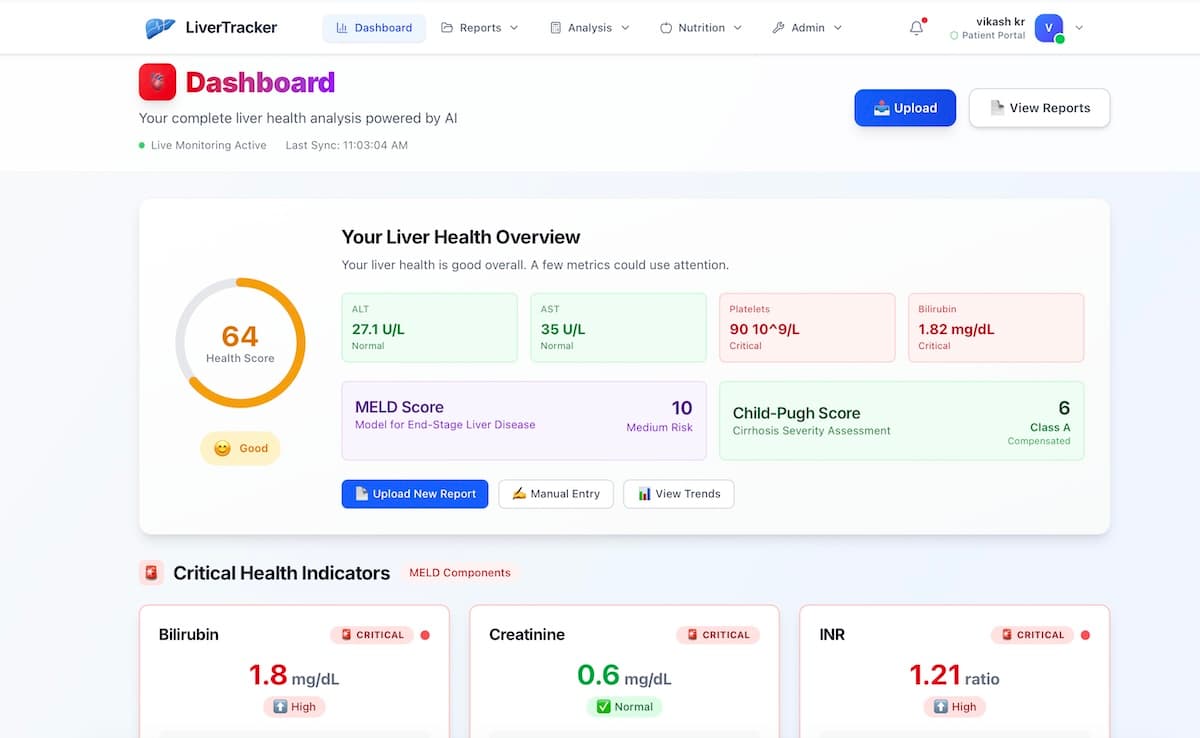
Upload lab reports and instantly see ALT, AST, GGT trends over time
AI-powered insights flag concerning changes before they become serious
Track your FibroScan scores and see fibrosis stage progression
MELD and Child-Pugh scores calculated automatically from your labs
Share reports with your hepatologist in one click
Get personalized health summaries based on your specific condition
See Your Data Come to Life
Upload your lab reports and get instant AI-powered insights, trend charts, and health scores.
Frequently Asked Questions
Can NAFLD be reversed?
Yes, especially in the early stages. Simple steatosis and even mild NASH can be reversed with weight loss, diet changes, and exercise. Once cirrhosis develops, reversal is much harder, but progression can still be slowed.
How often should I get my liver tested?
Most hepatologists recommend liver enzyme tests (ALT, AST, GGT) every 3–6 months for NAFLD patients, and a FibroScan annually. If you have NASH or fibrosis, more frequent monitoring may be needed.
Is NAFLD the same as NASH?
No. NAFLD is the umbrella term. Simple steatosis (fat without inflammation) is the mildest form. NASH (Non-Alcoholic Steatohepatitis) is the more serious form with inflammation and cell damage that can lead to fibrosis.
Does LiverTracker replace my doctor?
No. LiverTracker helps you track and understand your lab results between doctor visits. It gives you AI-powered insights and trends, but all medical decisions should be made with your hepatologist.
Free Tools for Non-Alcoholic Fatty Liver Disease (NAFLD)
Related Conditions
Take Control of Your Liver Health
Upload your lab reports, track your progress, and get AI-powered insights — all for free.
Get Started FreeMedical Disclaimer: This page is for educational purposes only and does not constitute medical advice. Always consult your hepatologist or primary care physician for diagnosis and treatment decisions.