Liver Condition Guide
NASH & Liver Transplant
From waitlist to recovery — tracking every number that matters on your transplant journey.
NASH is now the fastest-growing indication for liver transplant worldwide. When NASH cirrhosis progresses to liver failure, transplant becomes the definitive treatment. The journey involves rigorous pre-transplant evaluation, MELD-based waitlist management, and lifelong post-transplant monitoring.
NASH & The Transplant Journey
Liver transplant is considered when NASH cirrhosis progresses to decompensated liver failure — when the liver can no longer sustain essential functions. NASH has surpassed hepatitis C as the leading cause of liver transplant in many countries. The process involves extensive pre-transplant evaluation, active waitlist management driven by MELD scores, and lifelong post-transplant care to prevent NASH recurrence in the new liver.
Pre-Transplant Evaluation
The transplant evaluation is comprehensive and assesses both medical and psychosocial readiness:
- •Cardiac evaluation: Echocardiogram, stress test, and sometimes cardiac catheterization (NASH patients have high cardiovascular risk)
- •Cancer screening: CT/MRI to rule out extrahepatic malignancy; HCC within Milan criteria may qualify for MELD exception points
- •Metabolic assessment: Diabetes management plan, BMI evaluation (many centers require BMI < 40)
- •Psychosocial evaluation: Support system, compliance history, substance use assessment
- •Dental clearance, age-appropriate cancer screenings, vaccination updates
- •Nutritional assessment and pre-transplant optimization
MELD Score & Waitlist Management
Your MELD score determines your position on the transplant waitlist:
- •MELD ≥ 15: Generally qualifies for transplant listing
- •MELD is recalculated from labs every 7 days (MELD ≥ 25), 30 days (19–24), or 90 days (< 19)
- •MELD exception points may be granted for HCC, hepatopulmonary syndrome, or other conditions
- •MELD-Na and MELD 3.0 provide more accurate severity assessment
- •Organ allocation is based on MELD score within blood type and geographic region
- •Living donor transplant is an option that bypasses the waitlist
- •Regular lab monitoring is critical — a rising MELD means higher priority but also higher urgency
The Transplant Surgery
Understanding what to expect during and immediately after transplant:
- •Surgery typically takes 6–12 hours
- •ICU stay of 1–3 days, followed by 1–2 weeks in hospital
- •Immunosuppression begins immediately (tacrolimus, mycophenolate, prednisone)
- •Early complications to watch: primary graft non-function, hepatic artery thrombosis, bile leak
- •Most patients return to normal activities within 3–6 months
- •1-year survival rate exceeds 90% at experienced transplant centers
Post-Transplant Monitoring
Lifelong monitoring is essential after liver transplant, especially for NASH patients:
- •Immunosuppression drug levels (tacrolimus trough) checked frequently, then monthly
- •Liver enzymes (ALT, AST, GGT, ALP) to detect rejection or biliary complications
- •Kidney function (creatinine, GFR) — calcineurin inhibitors are nephrotoxic
- •Metabolic monitoring: NASH can recur in the new liver, especially with weight gain and uncontrolled diabetes
- •Cancer surveillance: Immunosuppression increases cancer risk (skin, lymphoma, de novo HCC)
- •Bone density monitoring — osteoporosis risk increases post-transplant
- •Cardiovascular risk management — leading cause of late death after liver transplant for NASH
Preventing NASH Recurrence
NASH can recur in the transplanted liver. Prevention requires aggressive metabolic management:
- •Weight management — post-transplant weight gain is common due to steroids and improved appetite
- •Diabetes control — many NASH transplant recipients have or develop diabetes
- •Statin therapy for dyslipidemia (safe with most immunosuppression regimens)
- •Regular exercise program starting 6–8 weeks post-transplant
- •Mediterranean diet to minimize hepatic fat accumulation
- •Regular FibroScan monitoring of the new liver
Key Labs to Track
MELD Score (Pre-Transplant)
Determines waitlist priority. Track trends to anticipate listing and allocation timing.
Tacrolimus Level (Post-Transplant)
Immunosuppression drug level. Too low risks rejection; too high risks toxicity.
ALT / AST
Pre-transplant: tracks liver failure. Post-transplant: detects rejection or NASH recurrence.
Creatinine / GFR
Kidney function monitoring — critical both pre- and post-transplant.
Bilirubin
Pre-transplant: MELD component. Post-transplant: biliary complication marker.
HbA1c
Diabetes control is essential to prevent NASH recurrence in the new liver.
Albumin
Nutritional status and liver synthetic function marker.
CBC (Complete Blood Count)
Monitor for immunosuppression-related cytopenias and infection risk.
How LiverTracker Helps
Track MELD score trends throughout your waitlist journey
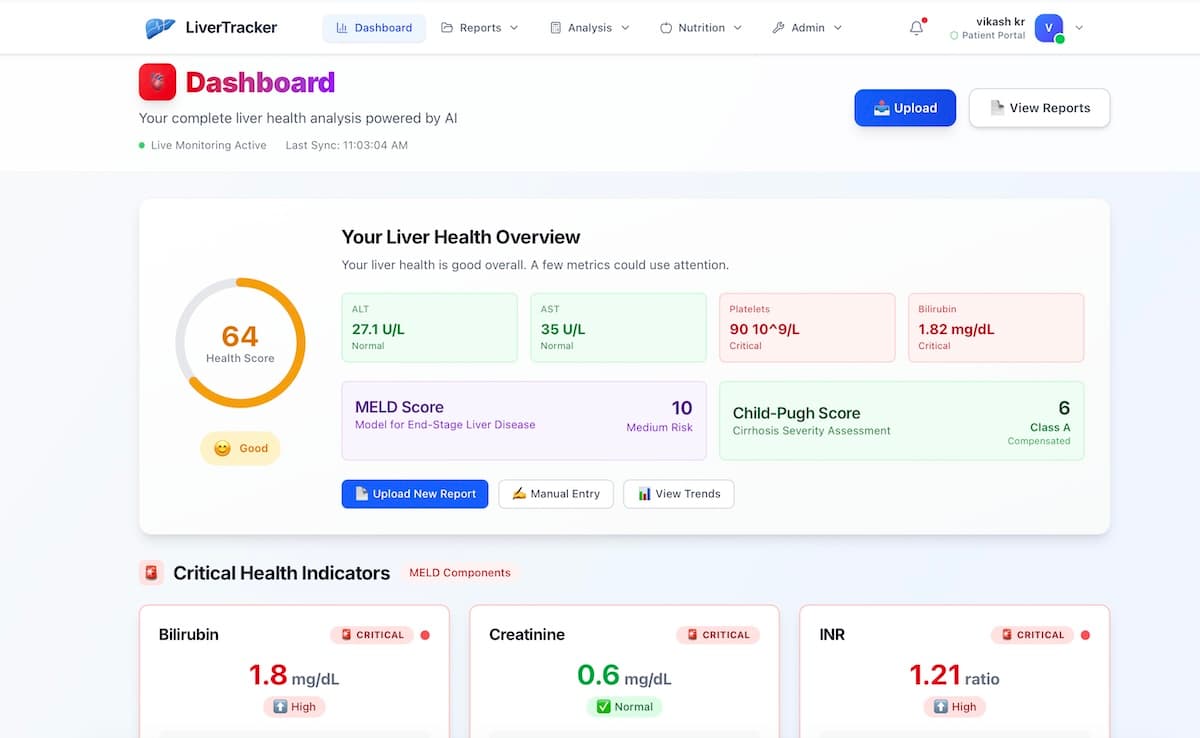
Automatic MELD, MELD-Na, and MELD 3.0 calculation from uploaded labs
Pre-transplant evaluation checklist to track required tests and clearances
Post-transplant lab tracking with immunosuppression level trends
AI-powered alerts for concerning lab changes suggesting rejection or complications
Track metabolic markers to prevent NASH recurrence in the new liver
Comprehensive report sharing with your transplant team
Daily log tracking for weight, symptoms, and medication compliance
See Your Data Come to Life
Upload your lab reports and get instant AI-powered insights, trend charts, and health scores.
Frequently Asked Questions
When is transplant needed for NASH?
Transplant is considered when NASH cirrhosis progresses to decompensated liver failure (ascites, variceal bleeding, encephalopathy) or when MELD score reaches 15+. Some patients with HCC within Milan criteria also qualify. Your transplant hepatologist will guide the timing.
Can NASH come back after transplant?
Yes. NASH recurrence in the transplanted liver is common, especially in patients with ongoing metabolic risk factors (obesity, diabetes, dyslipidemia). Aggressive lifestyle management and metabolic control are essential to protect the new liver.
What is the survival rate after liver transplant for NASH?
One-year survival exceeds 90% and five-year survival is approximately 75–80% at experienced centers. The main long-term risks are cardiovascular disease, NASH recurrence, and immunosuppression-related complications.
How long is the transplant waitlist?
Wait times vary significantly by blood type, geographic region, and MELD score. Median wait times range from a few months to over a year. Higher MELD scores receive organs faster. Living donor transplant can bypass the waitlist entirely.
Do I need to lose weight before transplant?
Many transplant centers require BMI below 35–40 for listing. Obesity increases surgical risk and post-transplant complications. Your transplant team will work with you on a pre-transplant nutrition and weight management plan.
Related Conditions
Take Control of Your Liver Health
Upload your lab reports, track your progress, and get AI-powered insights — all for free.
Get Started FreeMedical Disclaimer: This page is for educational purposes only and does not constitute medical advice. Always consult your hepatologist or primary care physician for diagnosis and treatment decisions.