Liver Condition Guide
NASH (Non-Alcoholic Steatohepatitis)
The critical turning point where fatty liver becomes progressive liver disease.
NASH affects roughly 3–5% of adults worldwide. Unlike simple fatty liver (NAFLD), NASH involves active inflammation and liver cell damage (ballooning) that can lead to fibrosis, cirrhosis, and liver failure. Early detection through regular lab monitoring is the best defense against progression.
Understanding NASH
Non-Alcoholic Steatohepatitis is the aggressive form of non-alcoholic fatty liver disease. While simple steatosis (NAFLD) involves fat accumulation alone, NASH adds inflammation and hepatocyte injury — a combination that triggers fibrosis. About 20% of people with NAFLD progress to NASH, and without intervention, NASH can advance to cirrhosis within 10–15 years.
How NASH Differs from NAFLD
The key distinction is inflammation and cell damage. NAFLD is fat alone; NASH is fat plus active injury.
- •NAFLD (simple steatosis): Fat in >5% of hepatocytes, no significant inflammation. Usually stable.
- •NASH: Fat plus lobular inflammation, hepatocyte ballooning, and often early fibrosis. Progressive.
- •Diagnosis is confirmed by liver biopsy showing the NAS (NAFLD Activity Score) ≥ 4 with ballooning.
- •Non-invasive markers (FibroScan, FIB-4, ELF test) can help assess fibrosis without biopsy.
Symptoms & Warning Signs
NASH is often called a 'silent' disease because symptoms are subtle until advanced stages:
- •Persistent fatigue and low energy
- •Dull pain or discomfort in the upper right abdomen
- •Unexplained weight loss (in advanced stages)
- •Elevated liver enzymes (ALT, AST) on routine blood work
- •AST/ALT ratio approaching or exceeding 1.0 (suggests advancing fibrosis)
- •Many patients are diagnosed incidentally during imaging or blood tests for other conditions
Risk Factors
NASH shares metabolic risk factors with NAFLD but tends to occur in those with more severe metabolic dysfunction:
- •Type 2 diabetes or insulin resistance (strongest predictor of NASH progression)
- •Obesity, especially visceral/abdominal fat
- •Metabolic syndrome (high BP, high triglycerides, low HDL, high fasting glucose)
- •Polycystic ovary syndrome (PCOS)
- •Obstructive sleep apnea
- •Hypothyroidism
- •Hispanic ethnicity (higher genetic susceptibility via PNPLA3 gene variant)
Treatment & Management
No FDA-approved drug specifically for NASH exists yet, but several are in late-stage trials. Current management focuses on lifestyle and metabolic control:
- •Weight loss of 7–10% reduces inflammation; >10% can reverse fibrosis
- •Mediterranean diet — proven to reduce liver fat and inflammation
- •Regular aerobic exercise (150+ min/week) plus resistance training
- •Pioglitazone may be used off-label for non-diabetic NASH patients
- •Vitamin E (800 IU/day) shown to improve histology in non-diabetic, non-cirrhotic NASH
- •GLP-1 receptor agonists (semaglutide) showing promise in clinical trials
- •Aggressive management of diabetes, dyslipidemia, and hypertension
- •Avoid alcohol completely — even moderate drinking accelerates NASH progression
Key Labs to Track
ALT (Alanine Aminotransferase)
Primary marker of liver inflammation. Persistently elevated ALT is a hallmark of NASH.
AST (Aspartate Aminotransferase)
Rising AST, especially AST/ALT ratio > 1, suggests advancing fibrosis.
GGT (Gamma-Glutamyl Transferase)
Elevated GGT correlates with NASH severity and cardiovascular risk.
FibroScan (kPa + CAP)
Non-invasive fibrosis and steatosis assessment. Track progression or regression over time.
FIB-4 Index
Calculated from age, AST, ALT, and platelets. Screens for advanced fibrosis without biopsy.
HbA1c / Fasting Glucose
Insulin resistance drives NASH progression. Tight glucose control slows fibrosis.
Triglycerides & LDL
Dyslipidemia worsens hepatic fat accumulation and cardiovascular risk.
Platelet Count
Declining platelets may signal portal hypertension and advancing fibrosis.
How LiverTracker Helps
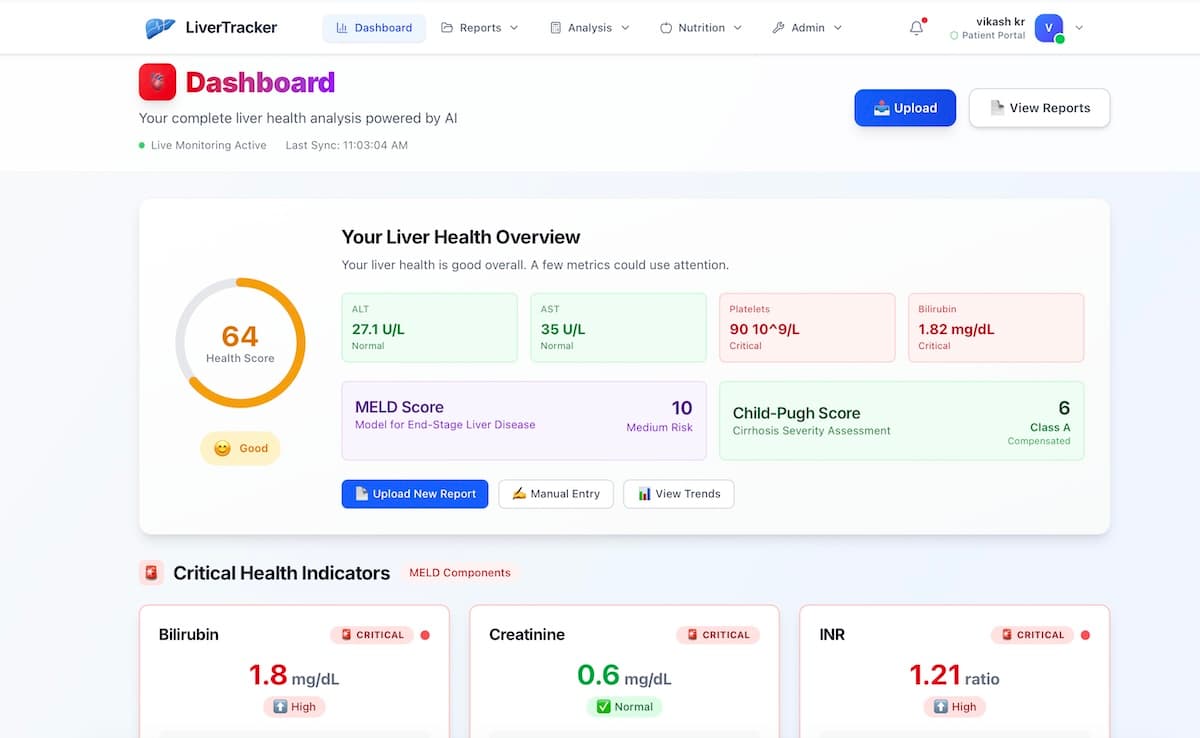
Upload lab reports and instantly track ALT, AST, GGT trends over months and years
AI-powered insights detect subtle patterns suggesting NASH progression
FibroScan score tracking with fibrosis stage visualization (F0–F4)
Automatic FIB-4 and APRI score calculation from your labs
Personalized health summaries tailored to your NASH stage
Track metabolic markers (HbA1c, lipids) alongside liver enzymes
Share comprehensive reports with your hepatologist before appointments
See Your Data Come to Life
Upload your lab reports and get instant AI-powered insights, trend charts, and health scores.
Frequently Asked Questions
Can NASH be reversed?
Yes, especially in early stages (F0–F2 fibrosis). Weight loss of 7–10% has been shown to resolve NASH inflammation in many patients. Even fibrosis can regress with sustained lifestyle changes. Once cirrhosis develops, reversal is much harder.
How is NASH diagnosed?
Definitive diagnosis requires a liver biopsy showing steatosis, inflammation, and hepatocyte ballooning (NAS score ≥ 4). However, non-invasive methods like FibroScan, FIB-4 index, and MRI-PDFF are increasingly used to assess fibrosis and fat content without biopsy.
What is the difference between NAFLD and NASH?
NAFLD is the umbrella term for fat in the liver without significant alcohol use. Simple steatosis (fat alone) is benign in most cases. NASH is the subset with active inflammation and cell damage — it is progressive and can lead to cirrhosis and liver failure.
Are there medications for NASH?
No drug is FDA-approved specifically for NASH yet, though resmetirom (Rezdiffra) was approved in 2024 for NASH with moderate-to-advanced fibrosis. Pioglitazone and vitamin E are used off-label. GLP-1 agonists like semaglutide are showing strong results in trials.
How often should I get tested if I have NASH?
Most hepatologists recommend liver enzyme tests every 3–6 months and FibroScan annually. If you have advancing fibrosis (F3+), more frequent monitoring and HCC screening may be needed.
Free Tools for NASH (Non-Alcoholic Steatohepatitis)
Related Conditions
Take Control of Your Liver Health
Upload your lab reports, track your progress, and get AI-powered insights — all for free.
Get Started FreeMedical Disclaimer: This page is for educational purposes only and does not constitute medical advice. Always consult your hepatologist or primary care physician for diagnosis and treatment decisions.